
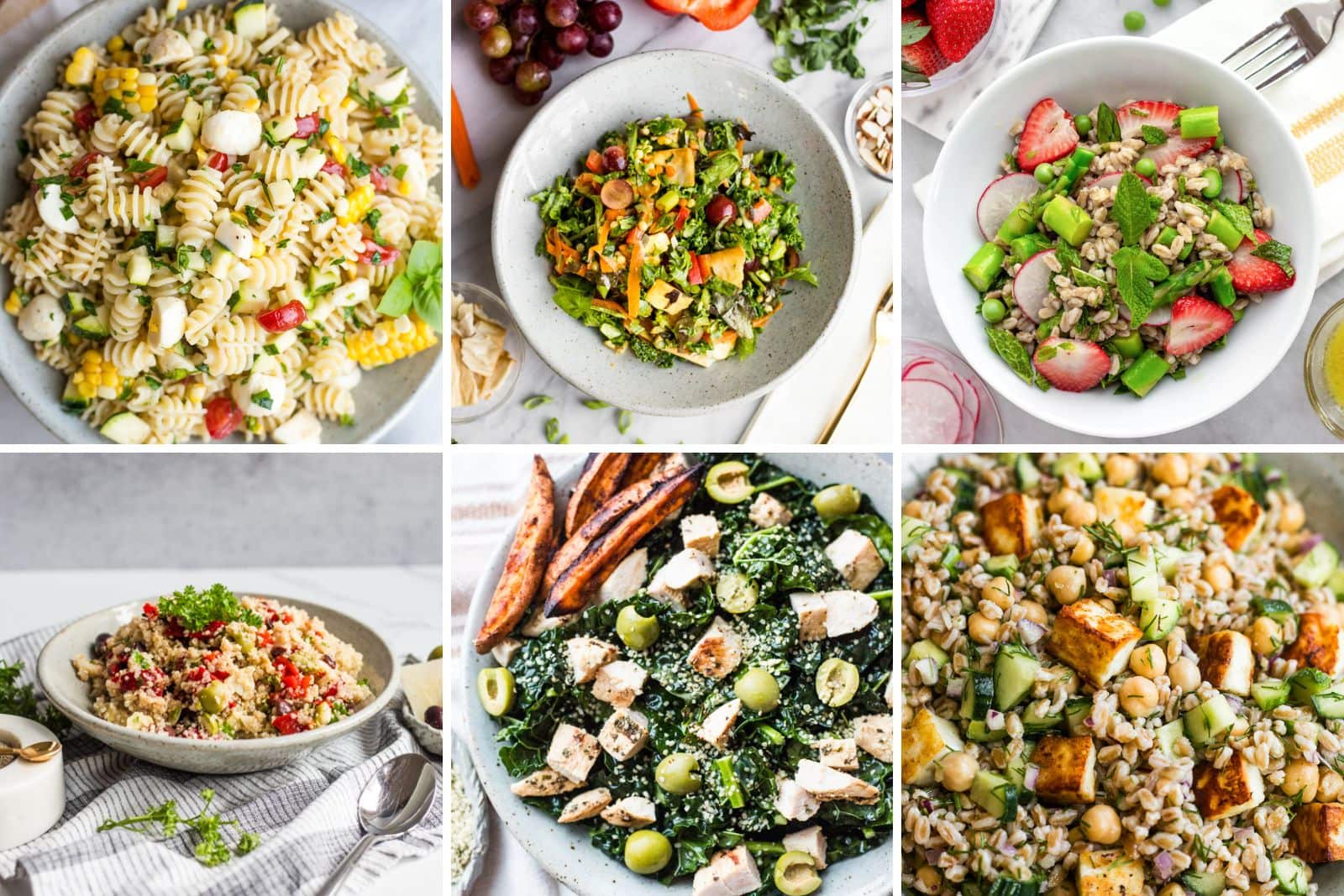
There’s a reason summer salads are always on repeat in my kitchen. They’re fresh, colorful, easy to make ahead, and one of the best ways to take advantage of all the incredible produce that’s in season.
But here’s something I think surprises a lot of people…
The best summer salads don’t always start with lettuce.
Some of my favorite salads begin with chewy grains like farro, tender pasta, juicy watermelon, sweet peaches, or crisp cucumbers. They’re hearty enough to be a meal, beautiful enough to serve at a backyard gathering, and often taste even better after they’ve had a little time to soak up all of the flavors.
Instead of memorizing dozens of recipes, I like to think about salads a little differently. Once you understand the basic formula behind a great salad, you can mix and match ingredients all summer long using whatever you already have in your refrigerator or whatever looks best at the farmers market.
Whether you’re looking for an easy weeknight dinner, a crowd-pleasing side dish for your next barbecue, or a fresh lunch that actually keeps you full, this simple salad equation will help you build a salad you’ll want to make again and again.

The Summer Salad Equation
Step 1: Start with a Base
Most people immediately think lettuce. Don’t limit yourself! “Salad” doesn’t need to mean a bowl of sad greens.
Some of the best summer salads start with ingredients that are more satisfying and hold up beautifully in the refrigerator.
Grain Salads
- Farro
- Quinoa
- Couscous
- Barley
- Brown rice

Pasta Salads
- Orzo
- Rotini
- Cavatappi
- Bowties
- Tortellini

Fruit Salads
- Watermelon
- Peaches
- Strawberries
- Blueberries
- Nectarines

Vegetable-Based Salads
- Cucumbers
- Tomatoes
- Corn
- Zucchini
- Green beans

Lettuce Salads
Yes! Lettuce still has a place—it just doesn’t have to be the star. But, think outside the mixed green box…
- Romaine
- Kale
- Frisee
- Spinach
- Red Leaf Lettuce

Step 2: Add Crunch
Texture is what makes people go back for another bite.
Ideas include:
- Pistachios
- Almonds
- Walnuts
- Toasted pepitas
- Sunflower seeds
- Crispy chickpeas
- Toasted breadcrumbs
- Cucumbers
- Radishes
The more ingredients you layer, the more texture! Add a few items to keep things interesting.

Step 3: Add Something Creamy
Creaminess balances bright vinaigrettes and crunchy vegetables.
Ideas:
- Feta
- Goat cheese
- Burrata
- Fresh mozzarella
- Halloumi
- Avocado
- Whipped ricotta

Step 4: Add Brightness
This is the ingredient category most home cooks forget. Acid wakes up every other flavor.
Choose one or two:
- Pickled onions
- Lemon juice
- Lime juice
- Red wine vinegar
- Champagne vinegar
- Pepperoncini
- Capers
- Quick-pickled cucumbers

Step 5: Fresh Herbs Make Everything Better
Don’t think of herbs as a garnish. Think of them as an ingredient.
Use generous handfuls of:
- Basil
- Dill
- Mint
- Cilantro
- Parsley
- Chives
This is one of the easiest ways to make homemade salads taste restaurant quality.

Step 6: Finish Like a Chef
Right before serving, finish your salad with:
- Good olive oil
- Freshly cracked black pepper
- Flaky sea salt
- Lemon zest
- Fresh Parmesan
- Toasted nuts
- Crispy shallots
Those last few additions can make a huge difference!

My Favorite Summer Salad Dressings
Rather than memorizing recipes, remember this simple blueprint:
Fat + Acid + Flavor + Seasoning
I like to do a ratio of about 2-3:1 for fat to acid. Meaning, 1/2 cup olive oil (or more!), to 1/4 cup vinegar. My typical flavor additions include dijon mustard, honey or pure maple syrup, garlic, and salt and pepper. The key here is to find the right balance of ingredients that yields a vinaigrette that YOU like. Some people prefer vinaigrettes that are more sweet, or more salty. Adjust the seasonings to your liking!

Summer Salad Tips
- Season every layer instead of only the dressing.
- Toss herbs in just before serving.
- Add crunchy ingredients at the end so they stay crisp.
- Make grain and pasta salads a few hours ahead—they often taste even better after the flavors meld.
- Dress leafy salads just before serving, but don’t be afraid to dress grain and pasta salads in advance.
Frequently Asked Questions
Can I make summer salads ahead of time?
Yes! Grain, pasta, and bean salads are often even better after a few hours in the refrigerator because the ingredients have time to absorb the dressing.
What’s the best pasta for pasta salad?
Short shapes like orzo, rotini, cavatappi, and radiatore hold onto dressing and mix easily with vegetables and herbs.
How do I keep salads from tasting boring?
Follow the Summer Salad Equation: include a base, crunch, something creamy, brightness, fresh herbs, and a finishing component. The combination of contrasting textures and flavors is what makes salads memorable.
What vegetables are best in summer salads?
Tomatoes, cucumbers, corn, zucchini, green beans, peppers, radishes, and fresh herbs are all excellent choices because they’re at their peak during summer.
My Favorite Summer Salads
Try these recipes:
- Farro Salad with Halloumi, Dill & Lemon Vinaigrette
- Southwest Quinoa Salad with Pickled Jalapeño Tahini Dressing
- Goat Cheese and Tart Cherry Farro Salad
- Mezze Quinoa Salad
- The Best Italian Pasta Salad
- Summer Pasta Salad with Fresh Corn, Zucchini & Mozzarella
- Pasta Salad With Chickpeas, Spinach, And Olives
- Grilled Vegetable Pasta Salad
- Peach And Goat Cheese Salad With Walnuts
- Watermelon Caprese Salad
- Fruit Plate With Applesauce Sweetened Tahini Sauce
- Spinach Artichoke Dense Bean Salad
- Snow Pea, Mushroom, Asparagus, & Red Pepper Salad
- Fennel, Cucumber, And Hazelnut Salad
- Chopped Dill Pickle Salad Recipe with Creamy Dill Dressing
- Antipasto Salad With Pepperoncini Vinaigrette
- Moroccan Salad With Curry Lime Vinaigrette
- Strawberry Poppyseed Salad
Final Thoughts
The best summer salads aren’t about following one perfect recipe—they’re about understanding the formula. Once you know how to combine a hearty base, plenty of texture, fresh herbs, and a bright dressing, you can create endless combinations using what’s in season. I hope this guide inspires you to think beyond lettuce and discover a few new favorite salads along the way.
